Partnering with Lumiio
Our Partners




Brief History
The team at Lumiio has supported dementia safeguarding initiatives for over a decade through our sister company Seritag, partnering with councils, police, and charities nationwide providing our wearable NFCs. Notable partnerships include Sefton Borough council, South Yorkshire Police, and Gateshead Council.
It was this work supporting safeguarding initiatives that eventually led to the Lumiio project. Through our work providing different wearable NFC products, we witnessed how the lack of consistency across design and the method of inputting information made recognition and useability harder.
The Solution? Lumiio
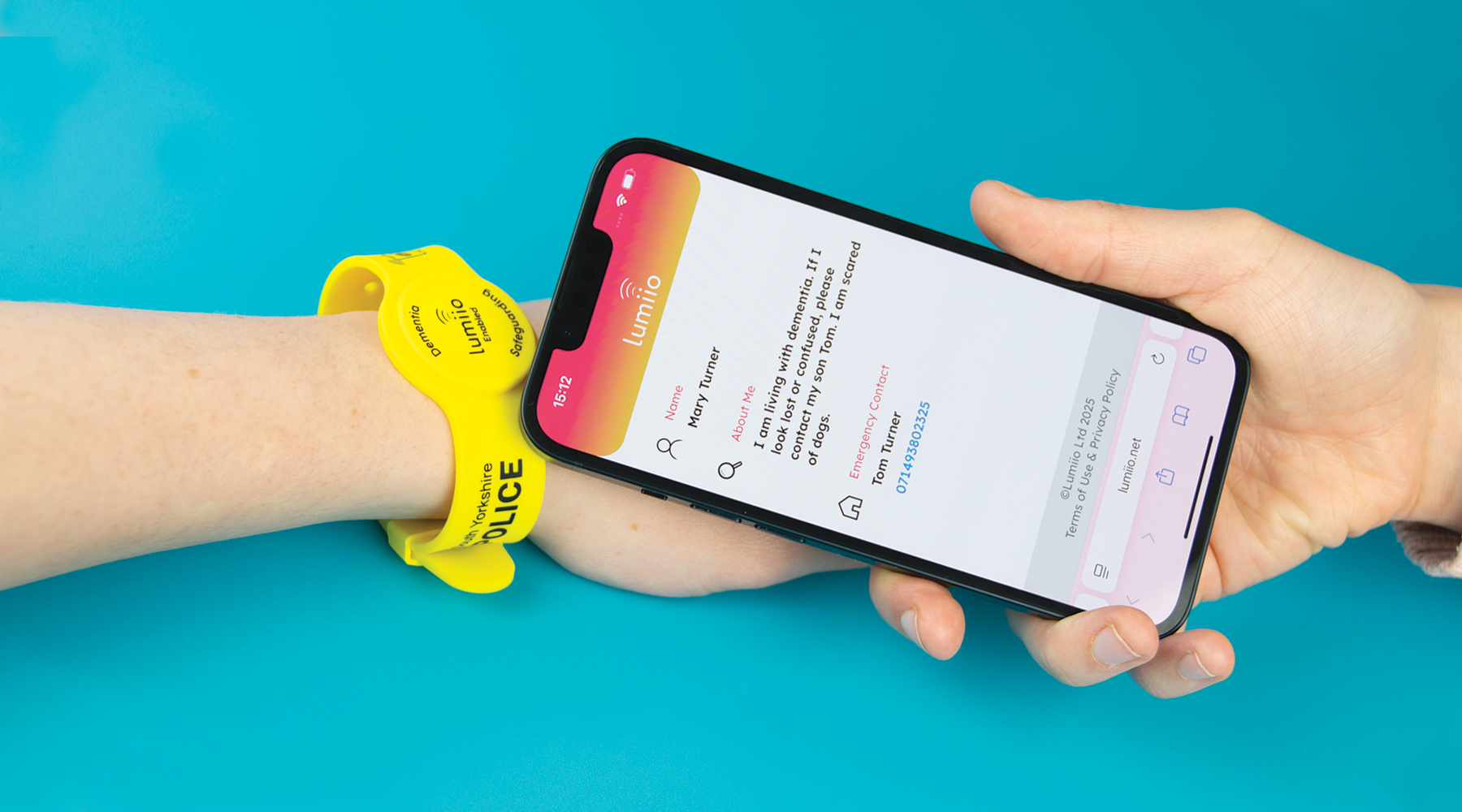
Our smart, wearable ID products allow first responders to instantly access essential personal information and emergency contacts through a simple tap & hold. Scanning the information never requires our app, and, because most modern smartphones are NFC enabled, Lumiio exists as the accessible and intuitive answer.
Click here to find out more about Our Story and view How-To-Guides
Lumiio: Identify, Support, Reunite
Lumiio's Benefits
Peace of Mind
At Lumiio we know how frightening it can be when a loved one is at risk to wandering and confusion, or susceptible to medical emergencies in public.
That's why our wearable NFCs are designed to act as reassurance. For carers and family, knowing a potentially vulnerable individual is always wearing the essential information that guides first responders on how to support them gives immeasurable comfort.
Reducing Strain on Emergency Services
When a vulnerable person becomes lost or is reported missing, it can take a long time for first responders to find the information required to identify, support, and reunite these individuals with loved ones or carers.
Lumiio's products help to reduce the strain on emergency services by making this essential information just a tap & hold away.
Encouraging Community Support
It is vital that individuals who become disorientated or confused, who have communication difficulties, or who are at risk of medical emergencies feel supported and protected in their communities.
A common boundary stopping potentially vulnerable individuals from receiving the assistance they need is the lack of access to information on how to help. Lumiio provides communities with the tools to cross this boundary, through giving secure and fast access to essential information our products enable members of the local community to help those in need confidently and appropriately.
Improves Reunification Time
When someone who is potentially vulnerable, like an individual living with dementia or a young child, goes wandering or becomes lost, they are considered to be at high-risk of harm. This risk increases exponentially with the time an individual is missing for. To reduce harm and ensure that vulnerable individuals are protected, it is absolutely critical to return them home as quickly as possible.
Lumiio wearable NFCs drastically reduce reunification time through their dual functions as both an efficient and accessible provider of essential information for those less able to communicate, but also as a way of identifying a potentially vulnerable individual in need of support.
Always-on Protection
The wearable design of our products mean that vulnerable individuals are able to wear them 24/7, providing round the clock safeguarding.
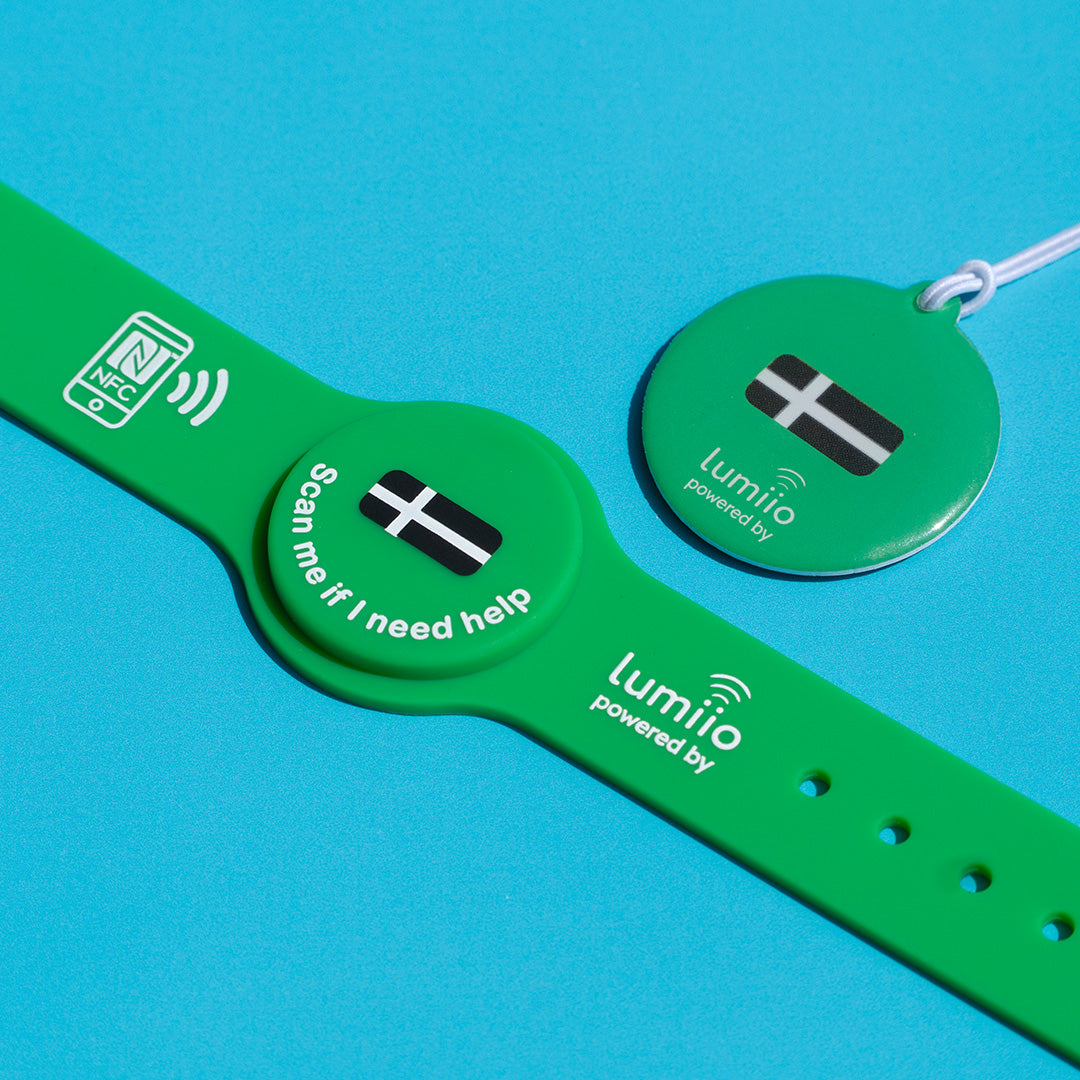
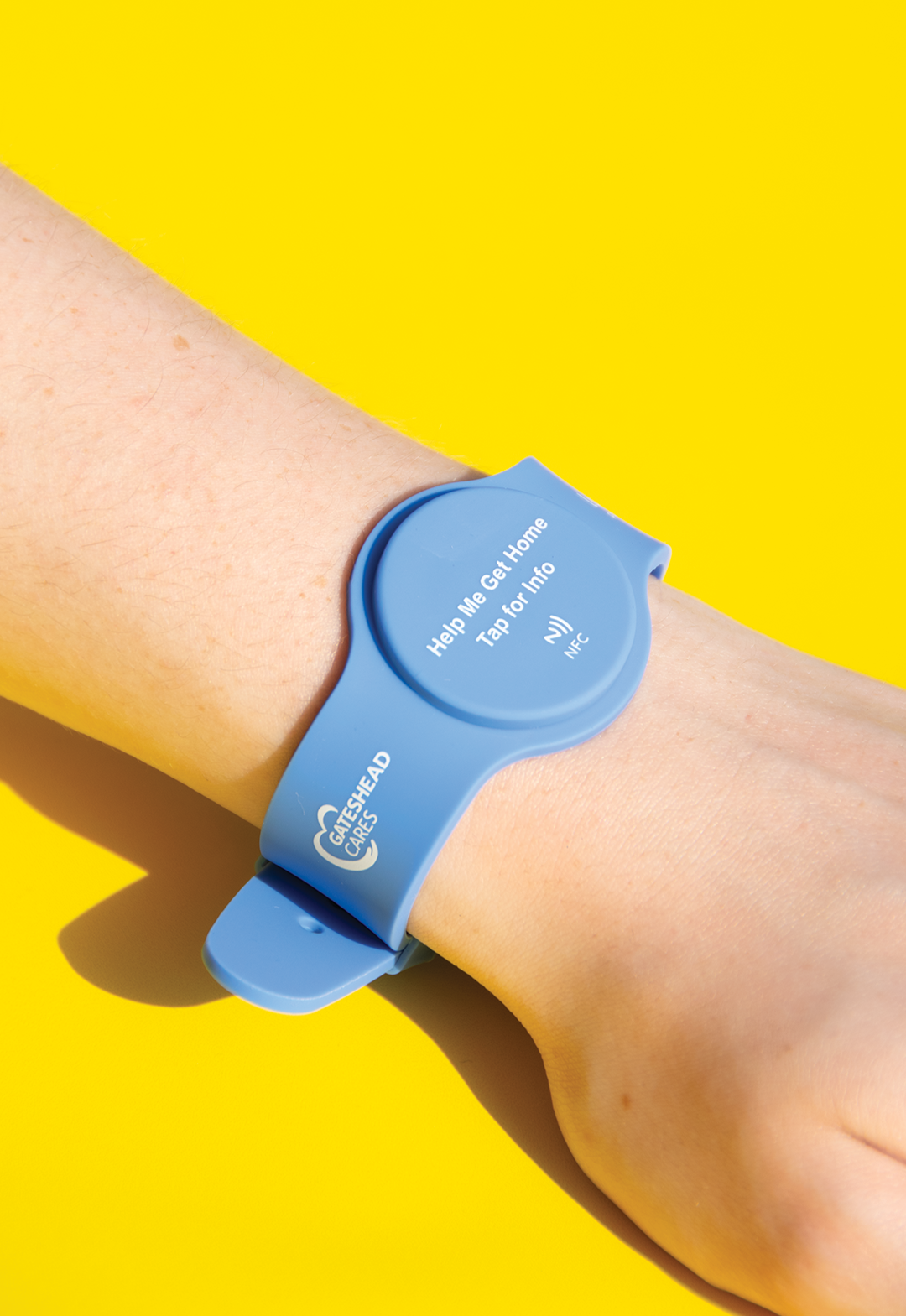
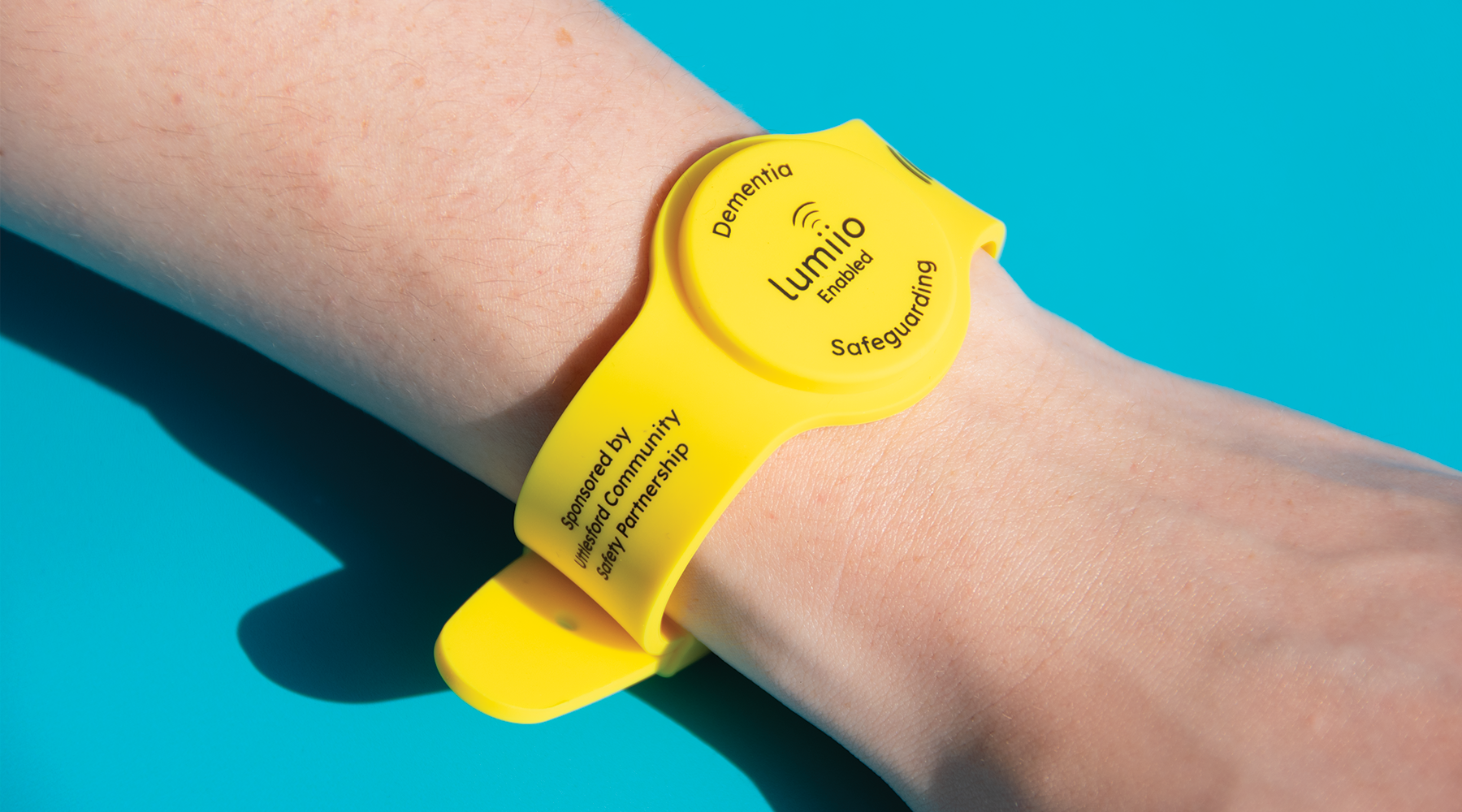
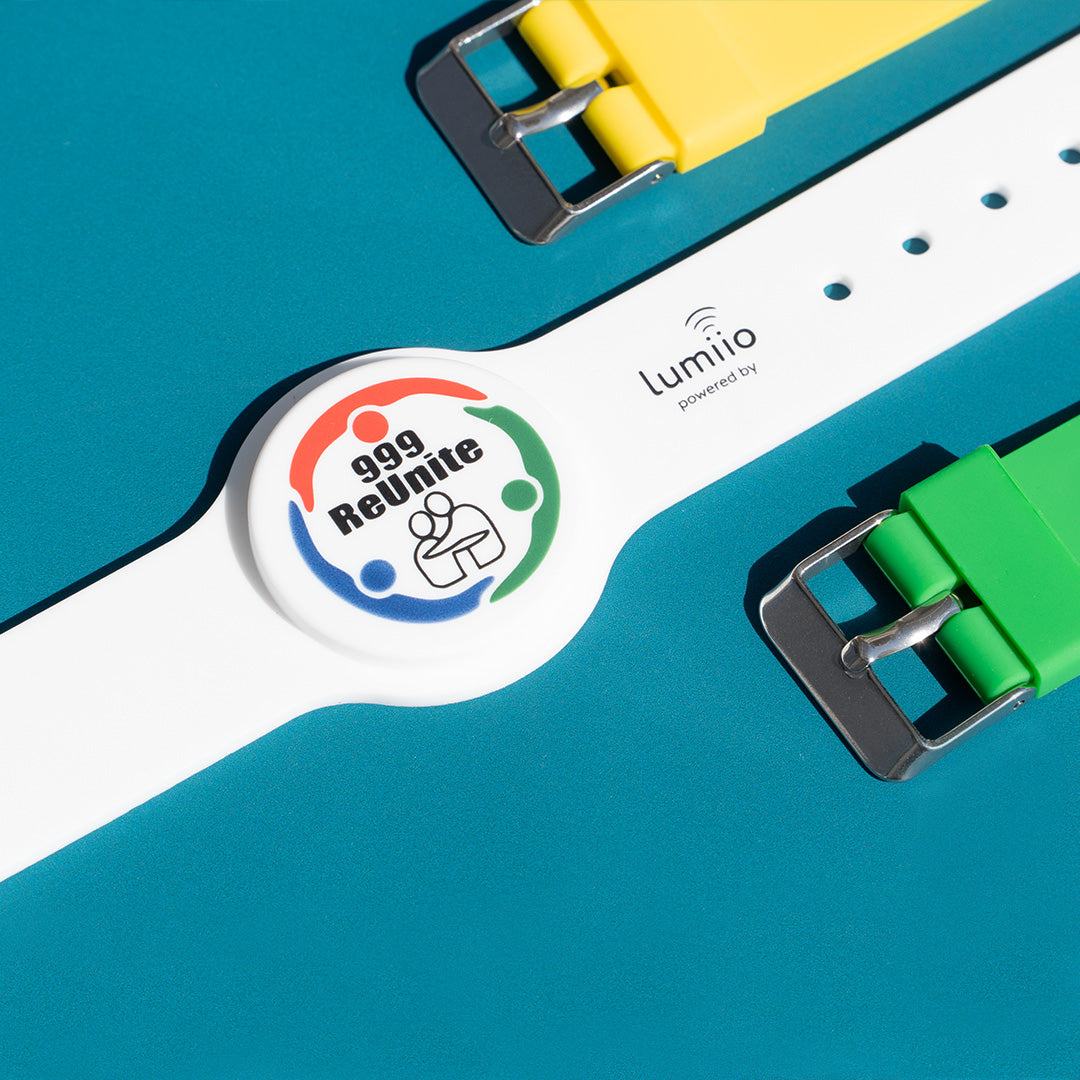
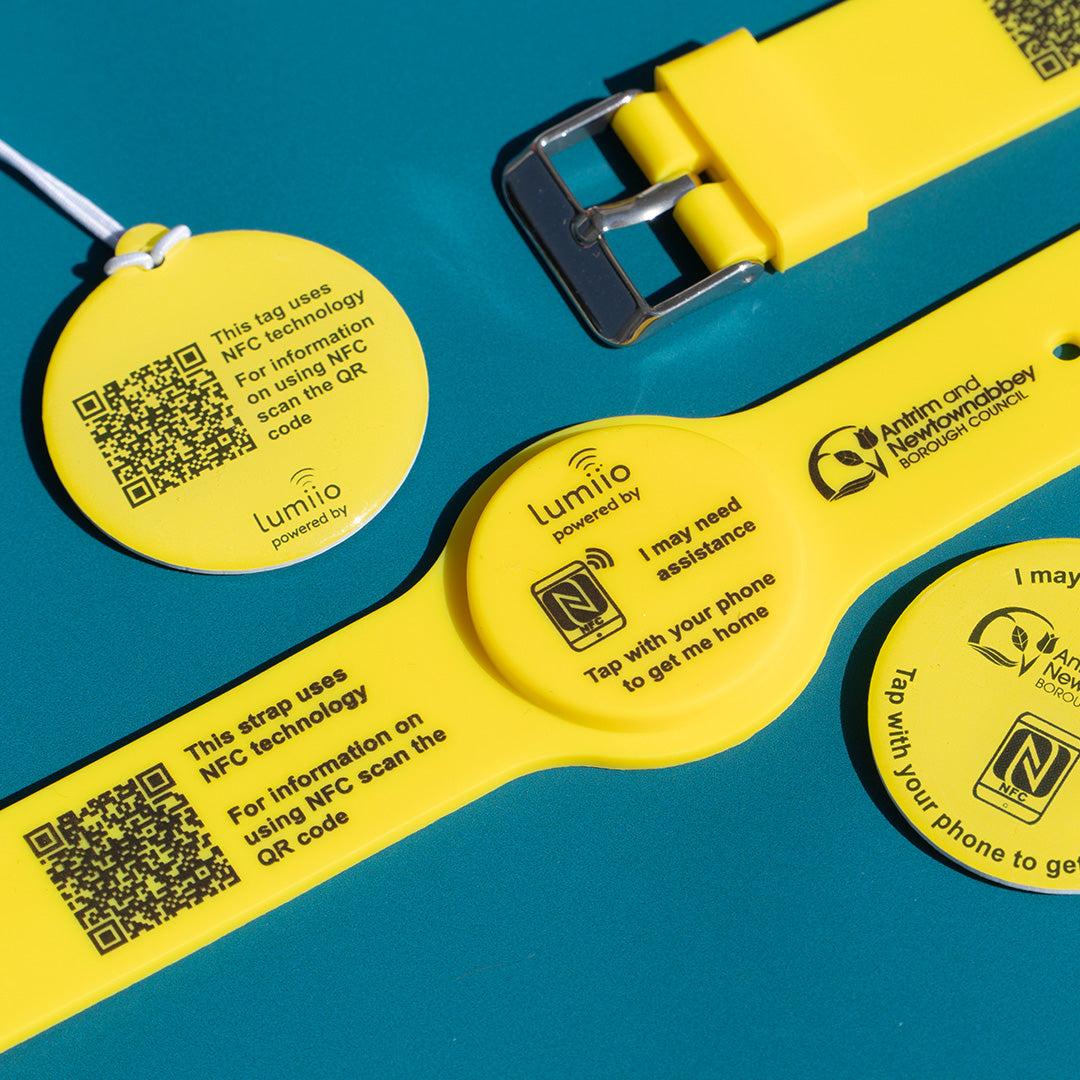
Lumiio products are designed for inclusivity and wearability, from the Soft-Touch Dementia Wristband designed to be worn like a watch, to the Token Hangtag that can attach to keychains or coat zippers.
Secure Data Storage
We know that the security of personal data is a serious concern, that's why any information linked to a Lumiio wearable NFC is protected by the virtually impenetrable AES-256 encryption algorithm, the same encryption level as banks and governments.
Each individual NFC functions as the key that unlocks access to that products specific data. Not only can a responder only access that products information, but this is also never stored on their phone.
What Our
Partners Are Saying
PCSO Jess BrownLeader of Durham Constabulary's Dementia Wristband Safeguarding Initiative"The wristbands offer peace of mind for everyone. For the wearer, knowing they have a safeguard in place allows for greater confidence and freedom in their movements. Caregivers and family members also benefit from them knowing that the wristband facilitates quick communication if needed."
Councillor Alistair CathcartMayor of Ards and Northdown"By introducing these simple but effective tools, we are empowering people living with dementia to remain independent, whilst ensuring that they are supported by their community."
PC John HollandDevon and Cornwall Police“We know that emergency
situations can sometimes be overwhelming. The wristbands are about putting the person at the centre of our response so we can make sure our communication and care is appropriate from the very first moment.”
Detective Chief Inspector Dave SavillCambridgeshire Police“It is crucial that people living with dementia can get to a place of safety and security, with friends or family, as quickly as possible. These wristbands will help to achieve that and reduce the demand on emergency services."
Councillor Charlotte ZossederDover Council“We are always looking at new ways in which we can help vulnerable people stay safe and this new tool will offer some reassurance to people living with dementia. It really is as simple as scanning the tag with your phone, but the positive outcome for that person and their families is immeasurable.”
What We Can Offer?
Our most common products from partners are our Lumiio ID Wristband, Safeguarding ID Hangtag, our ID Connect Cards, and Safeguarding Tapp ID Keyfob.
All of our products are designed for those for security and comfort, with the NFC tag embedded within the face of the product for easy scanning and visibility.
Customisation
We offer colour and content customisation by partners. This includes the product colour, and the option to add company text or logos.
We create our artwork proofs in house so it is as simple as contacting a member of the team with your ideas!
Customisation of our products is not just limited to supporting those living with dementia, but also individuals living with epilepsy, neurodivergence, allergies, and other conditions that potentially impede communication or make a person at risk of a public medical emergency.