

Summary
- What is wandering behaviour in autistic children?
- Why is wandering so dangerous for autistic children?
- What are the reasons that autistic children wander?
- How to protect autistic children who wander?
- How Smart ID Wristbands Quickly Reunite Wandering Autistic Children?
Why Are Autistic Children More at Risk of Wandering?
Running, bolting, or wandering off is typical behaviour for children under 5. Between 18 months and 5 years, children have a quickly growing sense of freedom and independence with rapidly increasing abilities to walk or even run. However, this increased desire and ability to explore is not matched with increased risk assessment or impulse control.
Generally, this behaviour becomes less common after age 5 and drops off after age 7. But for children on the autism spectrum, it can continue well into teenage years.
Not only do children with autism wander at an older age, but they are also at a much higher risk of wandering. Some studies suggest that at least 49% of children on the spectrum have bolted or wandered from their safe adult or setting.
Autistic Children Wandering
Autism and its connection with wandering behaviour is a huge concern for parents, teachers, and caregivers alike. Children on the spectrum have a greatly increased tendency to impulsively wander or even bolt off. This, coupled with typically far less developed risk assessment than neurotypical children, means that autistic children are at greater risk of becoming seriously lost or injured when wandering.
A large reason for this is that many autistic children struggle to communicate, meaning that even when they are found wandering, they often cannot communicate their name or their parent/guardian’s phone numbers. However, even extremely verbal neurodivergent children can be at great risk too. If a child is on the autism spectrum and has other conditions such as ADHD or anxiety, they may be unable to correctly convey their emergency information, becoming distracted, confused, or afraid.

What are the Key Dangers When Autistic Children Wander?
The same study that suggested 49% of autistic children have wandered also reported that almost half of the respondents had stated that their child had previously been missing for long enough to cause significant safety concerns. The two largest concerns for any child wandering, but particularly neurodivergent children, are road traffic and bodies of water.
When children on the spectrum become fixated on something, overstimulated, or simply curious, their weaker sense of danger can lead them to wander to busy main roads, motorways, streams, or other water sources. Other dangers include dehydration, falls, encounters with strangers, and emotional distress.
Why Do Autistic Children Wander?
- Curiosity and exploration
- Fixation on favourite place
- Running away because of overstimulation or anxiety
- Searching or pursuing a special topic of interest
- Enjoyment of running or walking
How to Protect Autistic Children Who Wander?
1. Prepare
- Inform your neighbours and local community that your child is prone to wandering, so they know to call you if they find your little one unsupervised.
- Keep a log of all of their wandering incidents to see if there is a pattern or trigger.
- Keep an up-to-date description of your child to hand with their important details (including a picture).
- Have a plan in place for what to do if your child wanders.
- If going on a day-out, decide on a meeting point with any other responsible adults and teach your child if you can.
2. Prevent
- Put safeguarding systems in place in your home by installing a front door alarm and secure fencing for any outdoor spaces.
- Keep a close eye on your child if you are visiting a new or overwhelming place, as this may make them more likely to wander.
- Try and be aware of your child’s emotional state to notice the signs that they may wander off.
3. Protect
- Teach your child road safety and how to swim.
- Inform your child who the emergency services are and practice speaking to them.
- Teach your child to respond to safety commands like “stop walking/running” or “come back!”
- Ensure your autistic child is wearing an ID that has their key emergency contacts (parents, guardians, teachers), some key details about them, and a place to meet if they are found wandering.
The Smart Communication Aid Solution: How Smart ID Wristbands Quickly Reunite Wandering Autistic Children?
In a busy shopping centre, public park, or beach, it can feel like one minute your child is right there holding your hand and the next they’ve vanished completely. Now imagine if your details were only a phone tap away and always right there with your child, so they can be easily reunited with you in minutes.
NFC-enabled ID wristbands are a passive, low-tech form of Augmentative and Alternative Communication (AAC). TLDR; They speak for the child when they can’t speak for themselves, e.g., if the child has wandered because they were overstimulated by a busy crowd and are non-verbal.
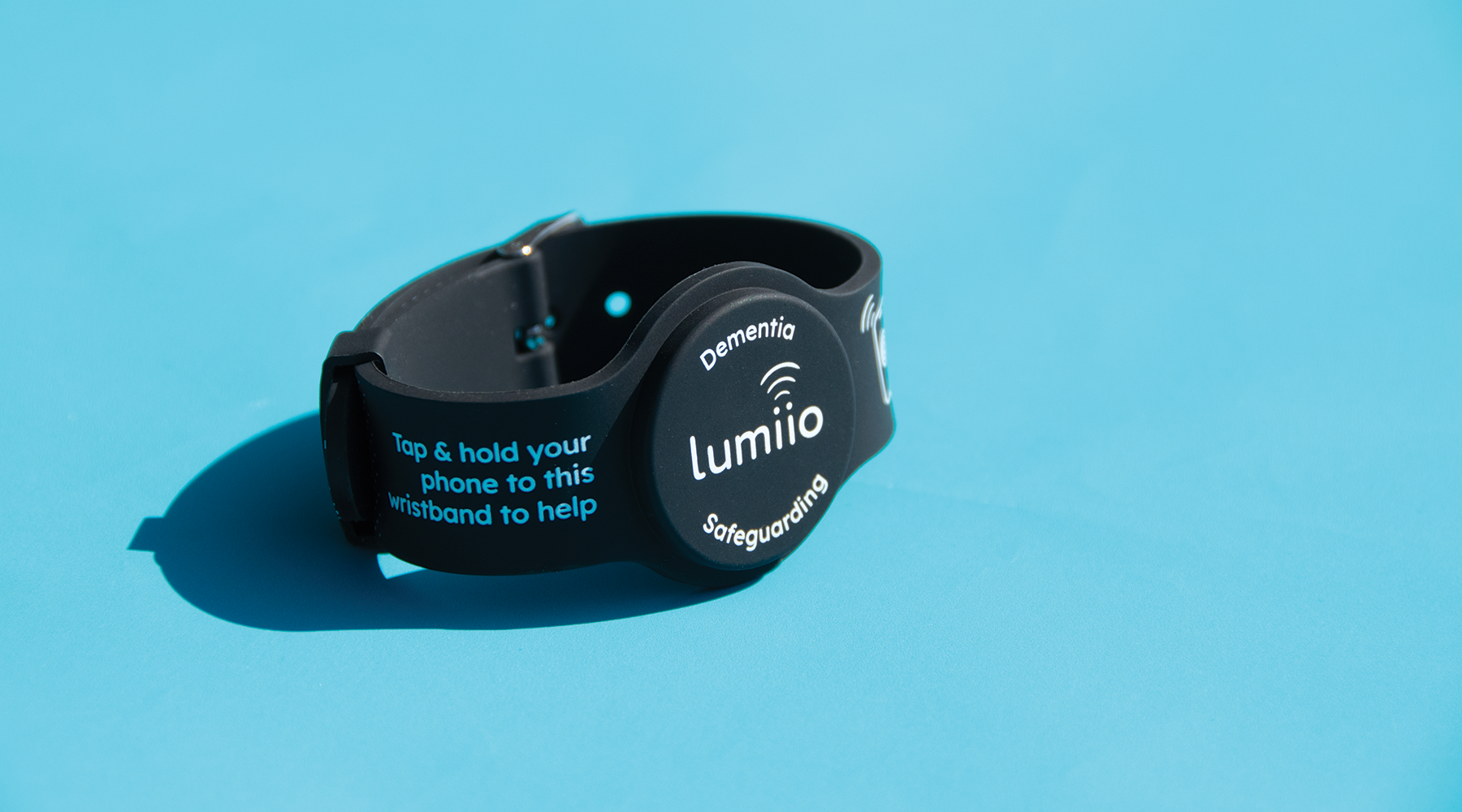
These wristbands store all of the essential information needed to quickly and securely reunite your neurodivergent child. When a modern smartphone is tapped against a Lumiio Kid’s Wristband, the child’s emergency contacts, agreed meeting point, and emergency details (e.g., allergies or communication issues) become instantly accessible.

What is Lumiio’s NFC Safeguarding Technology?
We originally developed our smart safeguarding technology to protect individuals living with dementia who struggle with disorientation, confusion, and are prone to wandering. To make sure that these vulnerable individual’s essential emergency details were always available, we developed Near Field Communication (NFC) enabled devices that store these key details and make them instantly accessible with a simple tap of any smartphone- no subscription needed!
Accessibility is crucial in an emergency, which is why we made sure you don’t need an app to access the details stored on a Lumiio device. All you need is an NFC-enabled phone- which is the majority of modern smartphones! We’ve also ensured that our devices are compatible with both iPhones and Androids.
How to Reunite a Wandering Autistic Child with Lumiio?
If you find a lost, distressed, or wandering child with autism, you can quickly and securely reunite them with their smart, emergency wristband. You simply tap and hold your unlocked smartphone against the wristband's face to access their essential emergency details. Then you can call their parent, teacher, or caregiver, and bring them to the designated meeting point for a seamless reunion.

View Lumiio's Kids Smart, ID Wristbands!



Share:
School Trips and Children Becoming Lost: How to Reduce the Risk?
Lumiio Joins Croydon Fire Station for Their Summer Open Day 2026