

Children Wandering
You’ve taken your child out to the local park, on a family holiday abroad, or on a day trip to the zoo; one moment your child is right there next to you, and the next they’ve vanished without a trace. This stomach-dropping moment is not unfamiliar to many parents and caregivers of young children, and those who haven’t experienced it have heard horror stories.
Wandering or running off is a common developmental behaviour in young children from ages 18 months to 5 years, caused by growing independence coupled with increasing mobility. Toddlers who can walk will want to explore the world around them, particularly new environments or exciting places, which can lead to disappearing acts and frantic searches. Although wandering behaviour tends to drop off after ages 4-5, older children will occasionally push the boundaries of parental control and expectations by going off to explore on their own.
Most often, wandering in young children is driven by their fast-blossoming curiosity. However, this new interest in the world around them is not mapped by a similar increase in impulse control or sense of danger, which can cause greater risks of harm to the missing or lost child. Equally, some children are more likely to bolt because of discomfort rather than curiosity. When young children struggle to communicate that they are overwhelmed by a large crowd, bright lights, or loud noises, they may instead try to escape their discomfort by running away from it unsupervised.
Protecting Your Wandering Child
Whilst it is important to try and prevent children from wandering or running away from their responsible adult as much as possible, it is crucial to consider protection and harm intervention if they do wander. Wandering prevention is key, but nothing can trump preparation.
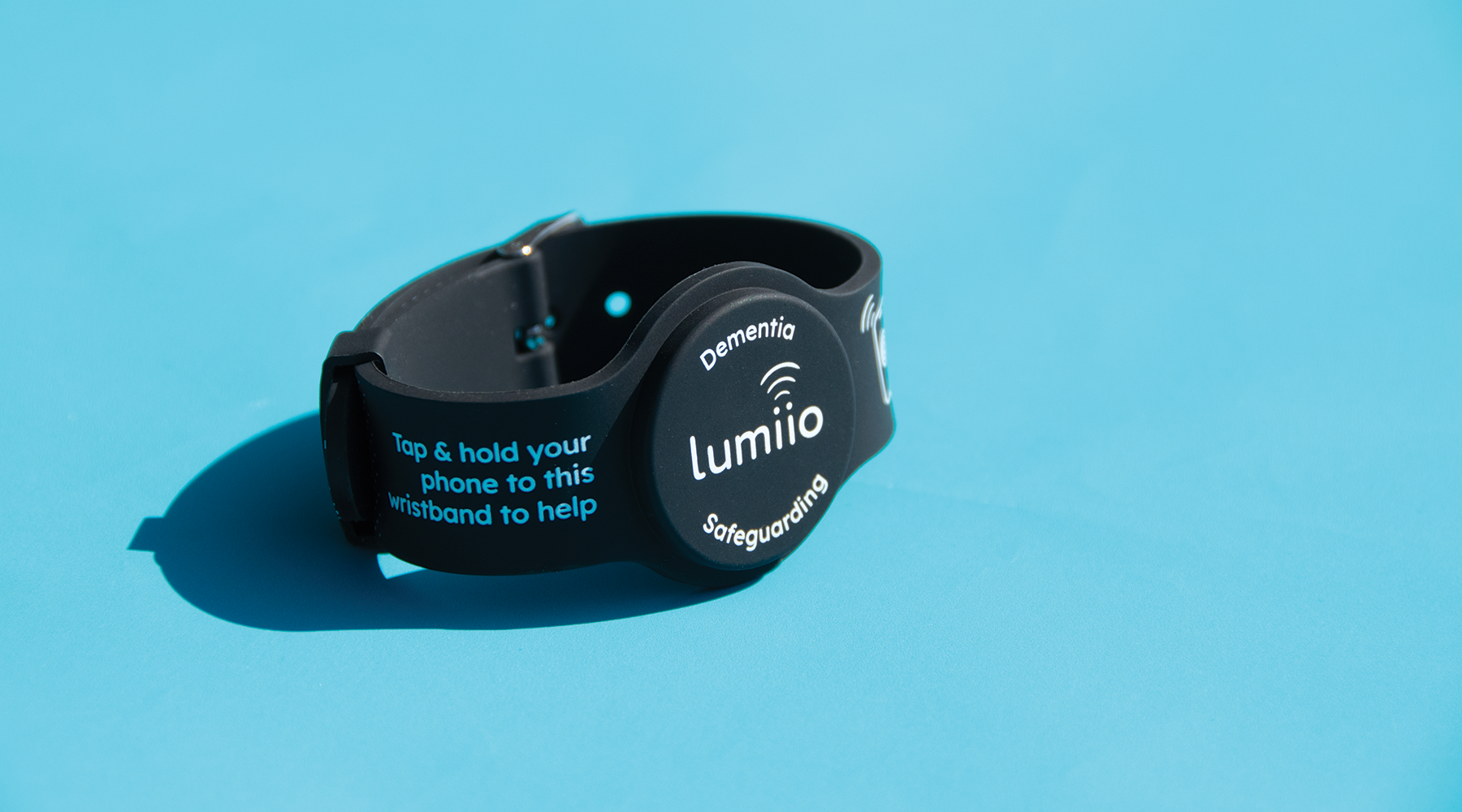
That’s why Lumiio has designed the new Kids’ Safeguarding Collection, helping to quickly reunite lost or separated children with their parents or caregivers through instant access to emergency contact information. Our lost children wristbands are designed to reduce the time a child is separated from their family using innovative near-field communication (NFC) technology. These soft-touch silicone wristbands are reusable, battery-free, and waterproof- designed for your little one’s big moments.

What is Discussed in this Article?
- What is Child Wandering?
- Where and Why do Children Get Lost, Run Away, Bolt, and Wander?
- Why is Children Wandering or Getting Separated so Dangerous?
- How to Quickly Reunite a Lost Child with their Parents or Caregiver?
- What is NFC-enabled Safeguarding?
- What Should You Put on a Child Safety Wristband?
What is Child Wandering?
Wandering is generally defined as when an individual who requires some level of supervision to be safe leaves their responsible adult or safe space and becomes exposed to potential dangers.
In children, wandering behaviour is typically goal-oriented. Children with growing independence and mobility see something interesting that they want, or that they fear and move towards or away in response. This is because although wandering children will have increased feelings of personal freedom and movement, their risk assessment has not caught up.
Why do Children Wander?
Toddlers, especially, are fascinated by the new, exciting world around them and are excited to run around exploring it. In particular, young children like experiencing the world through their senses, smell, taste, touch, and play are a huge part of understanding their environment. Young children are just beginning the process of seeing themselves as a person separate from their parents or guardians, a new feeling of personhood that is often practiced through physically separating from their caregiver.
Goal- Directed Wandering:
Visit a favourite place, e.g., a train station or playground.
See an exciting new thing, e.g., a ride at a theme park or an animal at the zoo.
Seeking sensory stimulation, e.g., water or grass.
To be chased by a caregiver.
Enjoyment of exploring or running.
Running Away/Bolting Wandering:
Avoiding something they’re afraid of, e.g., dogs or clowns.
Escape uncomfortable situations, e.g., loud noises or big crowds.
Other:
Confusion and disorientation, e.g., accidentally becoming separated.
Boredom or not paying attention, e.g., walking behind or ahead due to a lack of attention.
Where do Children Wander?
Children can wander anywhere, at any time. Most commonly, wandering occurs outside of the home or safe space, and this will typically occur in a busy or new environment. Examples of wandering hotspots are busy attractions like theme parks, aquariums, zoos, and festivals. New or exciting places can also make a child more at risk of wandering, like holiday destinations, school trips, and beaches. This could even happen during a routine or structured trip like visits to the local park, public transport, or extracurricular activities.

What Are the Dangers of Child Wandering or Running Off?
In the UK, a child is reported missing every 2.5 minutes. This statistic is shocking. However, it is important to understand that the majority, 79%, of children are found within 24 hours, and 90% are found within 48 hours. However, whilst children are missing, they are vulnerable. Exposure to the heat or cold, strangers, water, and traffic can all pose a threat to an unsupervised child’s wellbeing.
Equally, most children who wander cannot reliably give their parent or caregiver’s contact details when they are found by first responders. This lack of key information makes it much harder to reunite lost or separated children, causing additional stress to the children and their loved ones.
How to Quickly Reunite a Lost Child with their Parents or Caregiver?
The best way to make sure a child can be quickly reunited with their parents or caregivers is to prepare for wandering behaviour before it happens. By thinking and preparing before your child goes wandering, you can reduce a lot of the anxiety and potential harm if a wandering scenario does occur.
To ensure that any wandering, lost, or missing child can be quickly reunited with their caregiver, it is crucial that their emergency contacts and essential information are easily and securely accessible. NFC-enabled kid ID wristbands store parents' or caregivers’ details alongside the child’s key emergency details, like allergies or communication issues. This means that members of the public and first responders can easily and quickly call the child’s responsible adult , ensuring fast reunification whilst also supporting the child through the experience.
Lumiio’s Kids Collection is designed to do just this, providing instant and secure access to the essential information needed to reunite a wandering or separated child with their responsible adult without sacrificing safety or security.

What is NFC-Enabled Safeguarding?
NFC, or near-field communication, is a wireless technology which allows data transfer between two devices at a short range. An NFC tag contains a microchip and a small antenna that stores information like text or numbers. Examples of everyday NFC technology include bank cards, Apple and Google Pay, and ‘tapping in’ to public transport. NFC-enabled safeguarding utilizes this innovative technology by storing emergency information on an NFC tag, making it accessible to any modern smartphone with a simple tap and hold.
What Are the Benefits of NFC-Enabled Child Safety Wristbands?
- Instant reunification
- Immediate access
- Waterproof
- Battery-free
- Helps first responders contact parents/caregivers quickly
What Should You Put on a Child Safety Wristband?

Emergency Contacts
It is absolutely crucial that a lost or disorientated child can have their emergency contacts identified quickly by a responsible adult; this ensures faster reunification and drastically reduced distress for all involved.

Meeting Point
To further decrease the time that it takes to safely reunite a lost child, it is also critical to have a predetermined meeting point. This enables concerned parents or guardians to have more peace of mind, whilst also giving the responsible adult who finds a lost child the best location to reunite them with their caregiver.

Wearer Details
Unlike many child safety bracelets, Lumiio does not store the child’s name, as that is a safeguarding risk. An unknown adult referring to a child by their name could provoke unnecessary trust, which could lead to harm.
However, it is crucial that any details that would be essential in an emergency are easily accessible. These details could include an allergy, the child’s communication issues, or other key diagnoses.
Meet the Lumiio Kids Collection
Whether your little one is a deep-sea diver, a lover of magical unicorns, a star striker, or a jungle explorer, Lumiio has a fun design just for them. The team at Lumiio redesigned our classic Soft-Touch Wristband for smaller wrists, now with a smaller band length and slimmer width. Suitable for children’s wrists, this band can be adjusted with its pop-clip style closure to suit sizes from around 11cm/4 inches up to 20cm/7 inches.
The four wristbands each have a fun and visually exciting design, with the NFC logo clearly visible on the face of the wristband. The NFC tag is embedded within each wristband's face, protected by the soft-touch silicone, which offers reliable, waterproof, and battery-free protection.


The Kids 'Jungle' ID Wristband

The Kids 'Ocean' ID Wristband

The Kids 'Unicorn' ID Wristband

The Kids 'Football' ID Wristband


Share:
Child Wandering Guide: NFC Wristbands to Keep Your Little Ones Safe
School Trips and Children Becoming Lost: How to Reduce the Risk?