
Child Wandering: How to Prevent It and How NFC Wristbands Help Keep Children Safe
For parents, teachers, and any other caregiver, there is truly nothing scarier than realising that your child is missing. In crowded or unfamiliar places, it can feel like it happens instantaneously, where one second you are looking at them and the next, they have vanished. This article will discuss child wandering, how to prevent it, and how NFC Wristbands protect lost children.
What Will be Discussed in this Article:
- What is child wandering: why do children wander and why is it so dangerous?
- Why are neurodivergent children more likely to wander?
- What to do if you notice your child is missing (UK)?
- How to prevent your child wandering?
- Why NFC wristbands are the solution for lost children?
- What are NFC wristbands and how do they help?
- NFC wristbands vs GPS trackers
- What is the Lumiio Kids NFC Wristband: what are the key benefits and how to recognise it?
What is Child Wandering and Why Does it Happen?
The terms wandering and elopement are defined as when potentially vulnerable individuals leave the vicinity of their responsible caregiver or safe area. Wandering is more serious than young children briefly bolting from their caregivers; it refers to riskier situations which are more likely to result in harm or injury. Generally, wandering behaviour is a form of communication, expressing a desire or discomfort that the child is unable to communicate in another way.
Children can wander for a myriad of different reasons. Commonly, being in new and busy places can cause distress or confusion, which in turn can result in a child walking or even running away to remove themselves from the situation. Equally, children may wander because of excitement or the desire to see something. For example, in a theme park your child may be so excited to see their favourite character that they run towards them without asking you. Child wandering is commonly split into these two desires: to leave from discomfort or fear and leaving to obtain something or explore.
Common Places Where Children Wander:
- Theme parks/busy attractions
- School trips
- Family holidays
- Festivals
- Extra-curricular activities

Why Children Wandering is So Dangerous?
The risks of children wandering can range from feelings of fear to injury or harm to the child. However, the key risks associated with child wandering are:
- Emotional distress and fear
- Encounters with strangers
- Dehydration
- Falls
- Drowning
- Traffic Accidents
- Hypothermia or hyperthermia
Why Neurodivergent Children are More at Risk of Wandering?
A study by the Interactive Autism Network found that children with Autism Spectrum Disorder (ASD or Autism) have a nearly 50% risk of attempting to bolt or wander. Children with ASD often struggle with verbal communication and so find expressing their feelings difficult; wandering often occurs when they cannot communicate feelings of distress or a desire. For example, if an autistic child is becoming upset and overstimulated by the noise in the room and is unable to communicate this, they may leave without informing their responsible adult.
Children with autism are also far less likely to be able to communicate essential information in an emergency. This is particularly pressing as being unable to communicate things like their name and emergency contact’s number significantly increases the time it takes to identify and reunite the missing child. Furthermore, autistic children have a higher risk when they wander and become lost. According to the National Autism Association, children with ASD have higher risks of injuries or worse, often caused by traffic accidents and drowning.
What To Do If Your Child Goes Missing (UK)
- If you are in a public space, alert staff so they can use internal communication around the area to alert others.
- Inform the other parents, guardians, or caregivers you are with that a child is missing.
- Check all nearby dangers, like bodies of water, roads, and exits.
- Do not hesitate to call 999. The police recommend that if you are worried the missing individual could be in danger, you should report them immediately.
- Ask friends and relatives if they have seen them and ask them to keep an eye out.
- If your child has a mobile phone, contact them calmly and assure them you would like them to come home safely.

How to Prevent Child Wandering?
It is incredibly important to react appropriately and quickly when a child goes wandering; however, nothing trumps preparation. It is crucial to think about safety before your child ever goes wandering or missing, this way you may avoid this terrifying situation.
It can be hard to give fool proof preventative guidelines to stop children from wandering, as the causes can vary for each individual child. However, there are some things that parents should consider:
- Practice handholding and staying close.
- Teach children to respond to STOP commands.
- Ensure your child has an ID on them 24/7 that has their essential information easily available, in case they are found by a responsible adult while wandering.
- Inform neighbours, friends, and relatives if the child is prone to wandering.
- Teach your child to swim, to reduce the risk of drowning if wandering does occur.
- Give your child basic road safety knowledge.
NFC Wristbands: The Simple Child Safety Solution
It is crucial that a lost child is quickly identifiable so that they may be returned home safely faster. To ensure your child is easily identifiable, having their essential information easily available is critical. This vital wandering risk preventative can be achieved using NFC-enabled Wristbands.
What is an NFC-enabled Wristband?
NFC, or Near Field Communication, is the same technology used in Apple and Google Pay. Using wireless technology to enable contactless communication between a smartphone and a passive tag, NFC instantly and securely transfers information. NFC Wristbands have an NFC tag embedded within them which can store children’s essential emergency information, like their name, emergency contacts' names and numbers, and the child’s key personal details including diagnoses or communication preferences.
How NFC Wristbands Help Protect Your Lost Child?
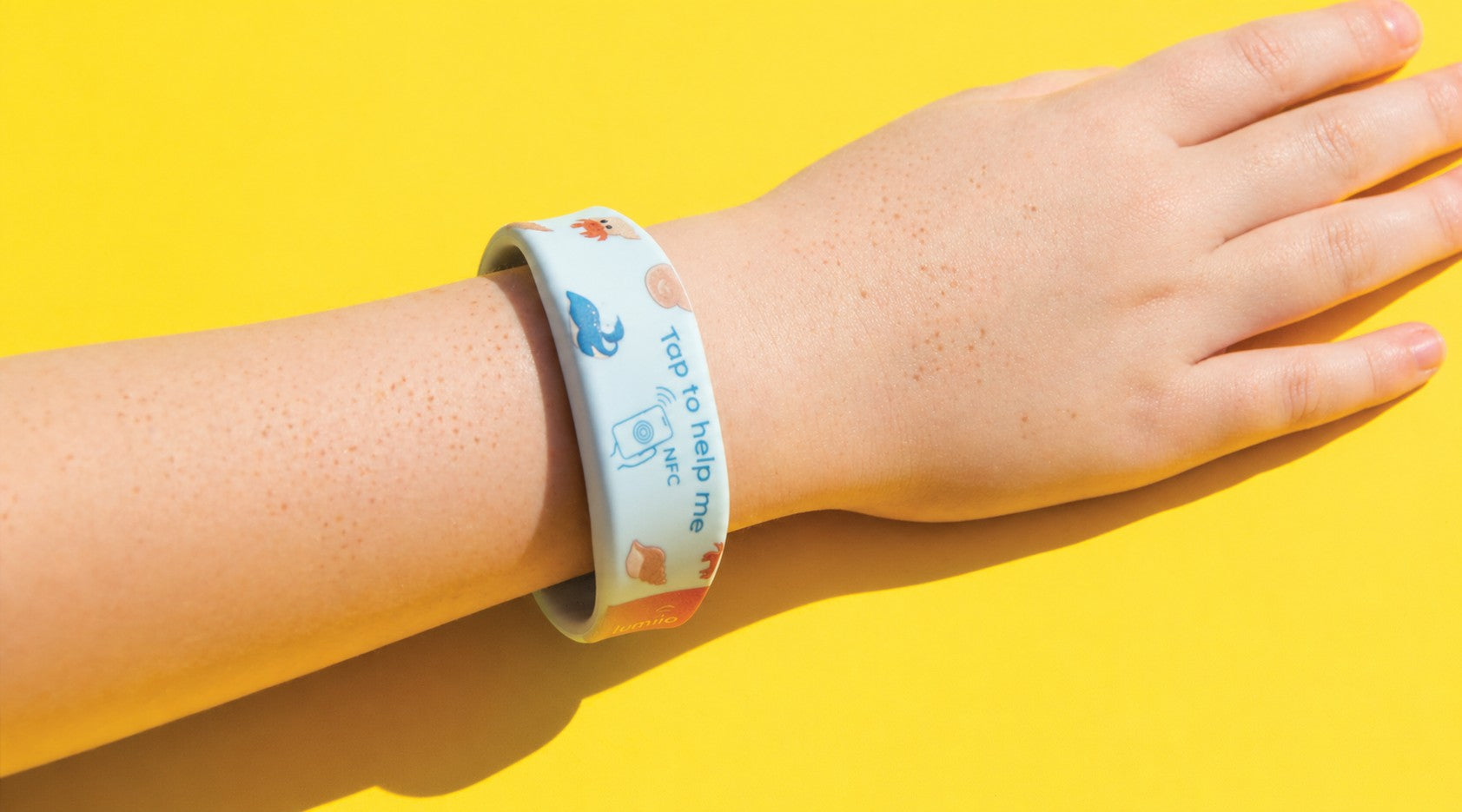
If your lost child is wearing a Lumiio Kids NFC Wristband when a first responder or community member finds them, the individual can simply tap and hold their smartphone against the wristband to retrieve the child’s essential information. Anyone with a modern smartphone can tap and hold a Lumiio product to retrieve the emergency information. This is because the majority of modern smartphones are NFC-enabled, and as Lumiio products do not require an app to access the information, your child is always easily and securely identifiable.
In stressful or scary situations, even normally confident and outgoing children can struggle to communicate their name, let alone their parent/guardians’ contact details or their own medical information. This issue is exacerbated even further for children with a form of neurodivergence, particularly autism. Hence why having their essential information efficiently accessible is so crucial.
NFC vs GPS Trackers: What are the key differences?
GPS Trackers
Although GPS trackers provide real-time location tracking, this can be inaccurate and also invasive for older children. GPSs also tend to be quite expensive, which can be frustrating with children prone to losing things. Equally, GPS trackers require either batteries or charging, sometimes even subscriptions.
NFC Wristbands
Instead, NFC wristbands focus on risk prevention and efficient reunification, rather than tracking the child to locate them. When someone finds your lost child, they can instantly and securely retrieve their essential information and contact you. Equally, you are also able to update the information stored on an NFC tag endlessly, at no extra cost. Furthermore, NFC products have a far lower price, no batteries or charging, a long product lifespan, and a much simpler setup.
Key Benefits of the Lumiio Kids NFC Wristband
- Essential emergency information is quickly and securely accessible.
- Peace of mind for parents and guardians.
- No charging or batteries required.
- Soft-touch silicone for comfortable wear.
- Significantly reduces the time it takes to return the child to safety.
- Lumiio products should last between 5 to 10 years- a long lifespan!
- Information is easy to update repeatedly using the free Lumiio app.
- Minimizes strain for missing children, as their communication preferences can are contained on the wristband.

What to Look Out For?
The Lumiio Kids Wristband has a new, thinner design, with shorter straps designed just for smaller wrists. In order to keep your little ones entertained, we’re creating an ever-growing collection of fun, themed patterns, with a design for each child to love. To ensure ease of use, these wristbands have a simple pop-clasp design for an easy but secure close.
To guarantee comfort while wearing the wristband, we’ve used the same Soft-Touch Silicone that we use in our Dementia and General Lumiio Collections. Its comfortable and waterproof properties make it ideal for children, so there are no tears or worries about spills!

Lumiio is previewing early-stage designs of the new Lumiio Kids Wristband at the Care Show in the Excel on Wednesday, 29th to Thursday, 30th April! Visit stand A13 to see the new collection in person and chat to the team.

Share:
Lumiio is Going to the London Care Show 2026!
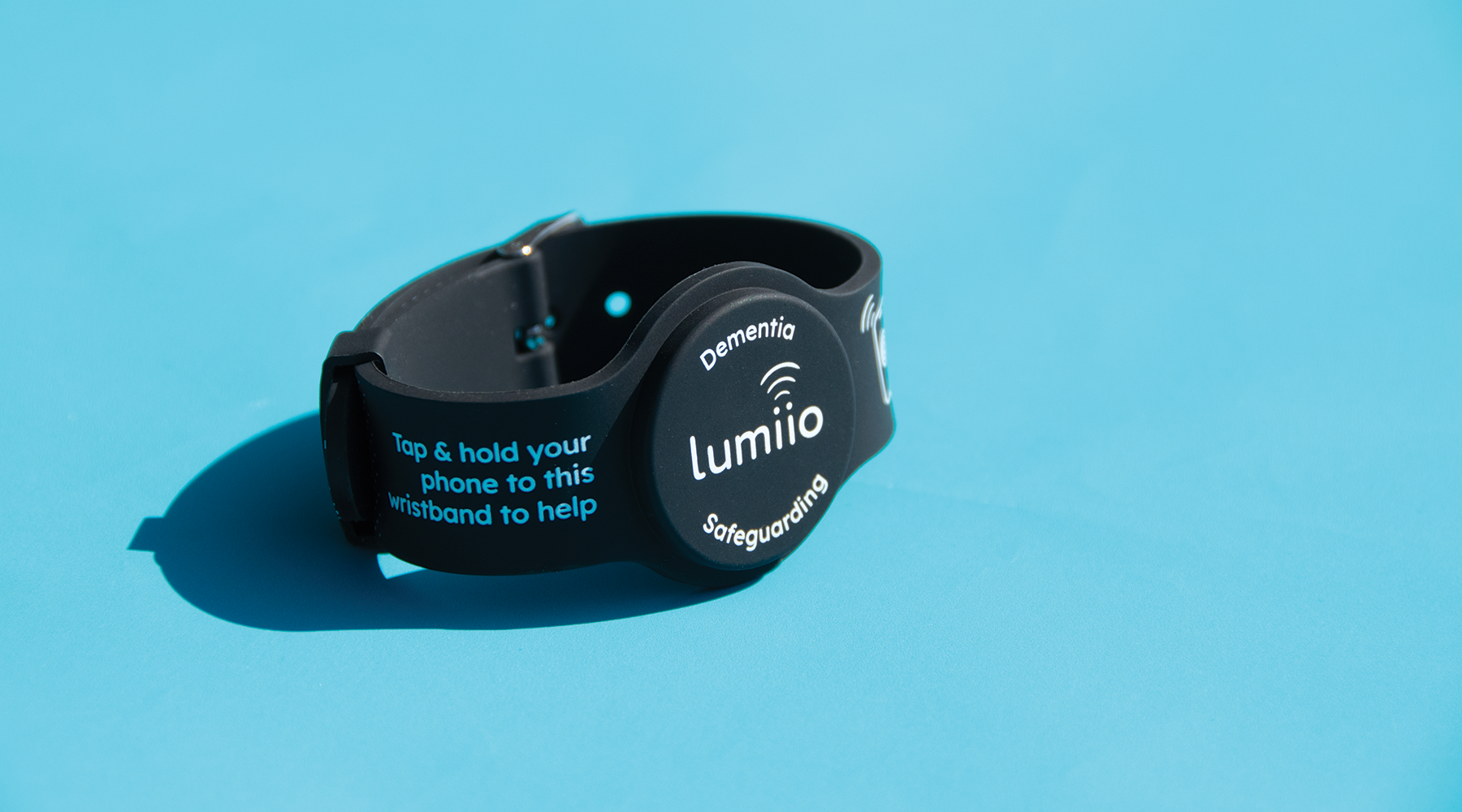
Lumiio's New Black Safeguarding Wristband